Philae Temple and Great Dam


After visiting Abu Simbel in the morning our tour group visited the Temple of Philae and the High Dam on the way back to Aswan.

Philae has been a major tourist attraction for thousands of years. Like Abu Simbel it was taken apart block by block and reassembled on higher ground for the building of the High Dam. Unlike Abu Simbel the ruins have always been known of and the early Christians, then the Muslims defaced the pagan carved reliefs and the original color has disappeared. With the others from our group we took a water taxi to Agilkia Island and wandered around the site. It was a nice temple and the location on the island was pretty.

Next we went to the High Dam. A controversial subject, the dam caused water to cover countless priceless ruins and local villages. But on the other hand allowed for more water and farmland for Egypt's quickly growing population and hydroelectric energy for the country. The dam has created the worlds largest artificial lake and although in person it is impressive, its history is what makes it so interesting. In 1956 after the USA, England and the World Bank withdrew the financial backing they had already offered for the project, King Nasser ordered the nationalization of the Suez Canal, creating the Suez Crisis in which France, the UK and Israel invaded the Canal Region. The United Nations then intervened and the Soviet Union funded the creation of the dam. It was finished in 1971.

The Temple of Philae for us was really nice but definately not the same amazing level we had seen earlier in the day at Abu Simbel. The High Dam was picturesque but its history and the ramifications of its being built are much more interesting than its actual appearance.

Steve

Abu Simbel


It is the much photographed temple of four large statues of Ramses II which is located along the southern border of Egypt, only 40km from the border with Sudan. We had certainly seen pictures of the temple, but didn´t know too much about the place. So we signed up for a visit there as a day trip from Aswan through our hotel.

Ramses II carved his great temple out of the mountain on the west bank of the Nile between 1274 and 1244 BC. The temple was dedicated to the gods Ra-Harakhty, Amun and Ptah and of course Ramses II himself. The imposing temple was created as a show of strength to any boats that sailed into the Pharaohs lands from the south. Eventually the site was forgotten and was covered with sand.

When the site was rediscovered in 1813 by Swiss explorer Jean-Louis Burkhardt (who also found Petra in Jordan) only one of the heads was showing above the sand, the next was broken off, and of the other two only the crowns were showing. When Egypt flooded the south of the country to create the High Dam UNESCO led a project to cut the temple out of the mountain and rebuild it on an artificial mountain created high above Lake Nasser.

Because of the shaky security situation in Egypt foreigners can only travel in armed caravans or by train in the Nile Valley. So at 3:30AM we were picked up and our minibus joined a caravan which traveled south through the desert. The desert here alternated between rocky and flat to sandy to mountainous. The sunrise over the desert was especially nice.

At around 8AM the convoy arrived at Abu Simbel. After buying tickets and being assaulted by the shop vendors we made it to the trail to the temple. The location, in the desert overlooking Lake Nasser is desolate and was already hot at this hour. We rounded the corner above the temple and got our first glimpse of the site.

It was breathtaking. The four statues of Ramses II were huge huge and very imposing. We entered the carved door in the front of the temple and were really shocked by how intact it was. Because it had been lost in the sand until 1813 it had not been defaced or destroyed and was very close to its original look. All the carvings were intact and the colors of the reliefs bright and original looking. You go from room to room, all of which have carved reliefs of Ramses victories in battle. We were not allowed to take pictures inside so we only have a few pictures of these reliefs.

The second temple on site, the temple of Hathor, is not as impressive as the main one but it is still beautiful in its own right. At about 11AM we climbed back on the minibus and headed back through the desert to Aswan.

The temple of Ramses II is probably the most intact and best preserved ancient building that I have ever seen anywhere. It is incredible that something constructed in the year 1244 BC can still be so beautiful and awe inspiring to this day. It was definitely one of the highlights of Egypt and the trip for me.

Steve

Elephantine Island and St. Simeon


One of our most memorable days in Aswan was spent visiting Elephantine Island and the Monastery of St. Simeon.

From the town of Aswan we took a local water Taxi across the Nile to Elephant Island. The island has historically been important in the area and is home to two Nubian villages. We were dropped off in front of one of the Nubian villages and walked through its narrow winding streets with is colorful painted buildings. Chickens and baby goats ran around our feet and children played in the fields. The Nubian's are a tall, dark-skinned people who have a separate culture, language and dress to the other Egyptians. They originated from Nubia, the region between Aswan and Khartoum in Sudan and they were displaced from their native lands when the Egyptian government flooded their area to create Lake Nasser.

After walking through the Nubian villages and the lush green fields we visited the Aswan Museum and the ruins of Abu on the south end of the island. The museum had some interesting exhibits (especially the mummies) but the ruins of Abu didn't really do too much for me. The ruins were in pretty bad shape and the security guard who insisted on following us everywhere didn't help. Afterward we walked back to the middle of the island and caught a row boat across the river to the west bank of the Nile.

Mustafa, who looked about 70 years old took us across the river in his beat up row boat. The old guy looked so frail that I offered to row us to the other side. My rowing wasn't pretty but eventually I got us across the river and we ended up on the west bank. There were camels for rent so after some serious bargaining we arranged a price and jumped on camels to the Monastery of San Simeon. Riding a camel is a unique experience as they are so tall that when they stand up you go way up in the air. Gaby ended up with a nasty camel which smelled bad and gurgled at her all the time.

After a leisurely stroll through the desert our camels arrived at the Monastery St. Simeon. The old monastery was nice but but its location in the desert, surrounded by sand dunes and overlooking the Nile was impressive. After we were done seeing the monastery we hopped back up on our camels and rode back to the bank of the Nile.

Our new friend Mustafa was waiting for us still and as he was the only option back he was kind enough to overcharge us even more for the return trip. Gaby tried her hand at rowing on the way back as Mustafa and I kicked back. Once back on Elephantine Island we caught the water taxi back to Aswan.

Our day on Elephantine Island visiting the Nubian villages and the ruins of Abu was fantastic and finishing it off with our camel ride to the Monastery made it quite a memorable day.

Steve

Aswan


After spending a few days in Luxor and checking out the surroundings we were ready to head south and visit Aswan.

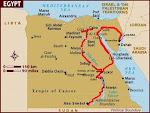
Egypt is working to make sure that its visitors are safe and unless you are part of a package tour and your bus joins the twice a day convoy, the only way to get down to Aswan through the Nile River valley is by train.

Although there are several things to see and visit in its surroundings, one of the best things for all visitors is to sit back and enjoy the views of the Nile River. It is really beautiful in this part of the country and it is nice to watch hundreds of feluccas (sailboats) and amazing cruise boats pass by.

We checked in a nice but noisy hotel on the Corniche (main waterfront road). From both the roof terrace and our room, we had amazing views of the Nile River with its feluccas, the islands that protrude from it, the ancient tombs on the other side of the river and the wonderful sunrises.

Aswan is a nice place and the temperatures were just right during our visit in November, although the locals claim that it gets up to over 120 degrees in the peak of the summer!

We spent a few days there and used it as a base to explore the southeastern part of Egypt. We walked the not-so-busy streets of its souq with its smell of coriander and cardamom and which seemed to be colored in the indigo powder that everyone sells. The dates are amazing in this part of the world!

Shop owners seemed to know every trick in the book regarding how to get you to go into their shops and even the young boys that sell papyrus bookmarks speak 4 or 5 languages which they avidly use to pursue a sale.

Nubian women weave beautiful baskets and it is possible to see men creating the glass blown perfume bottles that are very delicate to the touch.

We got to see some interesting things in the area and very much enjoyed our stay in Aswan.

Gaby

Karnak Temple


The Luxor area has been called the worlds largest open-air museum because of the incredible amount of well preserved monuments that surround it. Trying to see everything took some effort because there was so much stuff to see.

At the end of one of our days we jumped on a local mini-bus for the ten minute drive to the village of Karnak and tried to see the temple of Amun before it closed. We walked through the gigantic parking lot (we counted 44 tour buses parked there at the time) and went to the ticket booth. The man in the ticket booth told Gaby that it was 4:31pm, the park was closed, and he would get in trouble if he sold us tickets. He suggested we talk to the guards at the entrance about getting in and proceeded to shut to door in Gaby's face. We headed to the entrance and Gaby begged the guards. Somehow she persuaded them to let us poke our heads in for a quick look around before they emptied the place for the nightly light show. We were able to walk around for almost an hour before exiting with the rest of the end of day stragglers.

Karnak is a spectacular complex of sanctuaries, kiosks, pylons and obelisks, all dedicated to the Thebian gods and to the greater glory of Egypt's Pharaohs. Karnak was the most important place of worship in all Egypt during the height of Theban power and was called Ipet Isut, meaning "The Most Perfect of Places."It was one of the bigger temple complexes and as we were pressed for time we couldn't linger too much at any one place. Yet I felt that we got to see everything and really enjoyed the place. One of the highlights for me was standing on top of one of the temples and watching the sun go down over the site.

We feel grateful to the guards at the temple of Amun for allowing us to "poke our heads in" and get to see the fantastic Karnak Temple at the end of a busy day.

Steve