


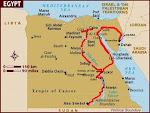




The fourth country that we visited on our extended trip was Egypt, the land of the pharaos.
We weren’t really sure what to expect in Egypt as we had heard so much beforehand about the place both good and bad from books and other travels. So we just jumped in.
Egypt has a population of 67 million people living in a country that is 95% desert. Of that population 95% lives along the Nile River in the 5% of the country that is considered habitable. And 50% of the population lives or works within 150km from Cairo. As a consequence Egypt is the most densely populated country in the world.
Egypt is obviously famous for the culture of the Pharaos but what we also learned during our trip that in the 5000 years after the Pharaos Egypt was ruled by Alexander the Great (Greeks), the Romans, the Arabs, the Ottoman Turks, the British and then in 1952 they gained independence. This has created the complex and varied Egypt of today.
With its gorgeous temples and Red Sea Diving tourism has been for a long time been Egypt’s number one form of income and employs directly or indirectly a sizeable percentage of Egypt’s population. This presented a couple of issues for us during the trip. First is the "Baksheesh". Egypt is a poor country and most people who have a job are badly paid. As a result tips are expected as a supplement to the locals salaries. Everywhere we went the people we dealt with wanted a baksheesh or tip for everything done. Armed guards would ask for baksheesh after showing us details at the ruins that we didn’t ask to see. We understood that people were poor and had a tough life but at the same time it was tough for us to have to pay tips to the locals for things that where we came from are free. Also, we got tired of getting taken advantage of by the locals when we shopped. Everything had two prices: the local price and the tourist price. Unlike where we come from the markets there did not have fixed prices. The locals know how much things cost but when we went to the store to buy food or provisions the locals would say “how much do you want to pay for this.” As we did not know the price we would say a price. If the price was too low the shopkeepers would get angry and indignant. If the price was too high we would get ripped off. It was no win. By the end we felt that we had a dollar sign on our foreheads.
The government worked hard to protect foreigners from domestic terrorists that look to create fear in tourists and cripple the lucrative tourist trade. We had to travel in armed convoys or stop endlessly in roadblocks. As a result it was more difficult for us to get off the beaten path in Egypt because the government wanted to make sure we were accounted for and protected. Unlike other countries we traveled to we saw few independent travelers in Egypt. Most visitors came in packaged tours and had all facets of their stay taken care of.
In terms of politics, the present leader of Egypt is only the third head of state since its independence in 1954. People seem to have little to say in the matter and are generally denied a voice in the political system. As a result, many Egyptians have turned their focus on religion. Egyptians are generally quite religious and you see many with their foreheads worn from praying.
When Egyptians socialize they (men) get together in cafes and drink shai (tea) and smoke shisha (water pipe). The women only get together in their houses where they can watch their kids. By and large the Egyptians don’t drink alcohol.
The clothes people wore depended on where in the country they live. In the small towns and conservative areas the men wear the gown-like "galabiyya" and the women the long black all-concealing "abeyya". In the big cities people wear more western clothing although as a general rule women always covered their heads.
Physically the country is rugged. With such a high percentage of the country desert much of the country consists of the beautiful coastline of the Red Sea with its beautiful clear water, the dry mountainous desert, free of vegetation, the sandy desert with its high dunes or the fertile green ecosystem created by the Nile which is the economic heart and soul of the country. We were glad we visited in the winter as the temperatures rise to above 50 degrees Celsius in the Summer.
All in all Egypt was quite an experience. The Red Sea Coast was beautiful with its world class diving and clear water. The temples were some of the highlights of our entire trip with Abu Simbel, The Pyramids, Edfu and Valley of The Kings some of the best. Sailing up the Nile was quite an experience and Cairo is an amazing city that and requires days to see.
On the negative side we didn’t like the governments´ limits to freedom of movement in Egypt and were frustrated by how the locals would take advantage of us. It caused us to become distrustful and strictly businesslike in our dealings with them and caused us not get to know the locals personally.
Steve
We weren’t really sure what to expect in Egypt as we had heard so much beforehand about the place both good and bad from books and other travels. So we just jumped in.
Egypt has a population of 67 million people living in a country that is 95% desert. Of that population 95% lives along the Nile River in the 5% of the country that is considered habitable. And 50% of the population lives or works within 150km from Cairo. As a consequence Egypt is the most densely populated country in the world.
Egypt is obviously famous for the culture of the Pharaos but what we also learned during our trip that in the 5000 years after the Pharaos Egypt was ruled by Alexander the Great (Greeks), the Romans, the Arabs, the Ottoman Turks, the British and then in 1952 they gained independence. This has created the complex and varied Egypt of today.
With its gorgeous temples and Red Sea Diving tourism has been for a long time been Egypt’s number one form of income and employs directly or indirectly a sizeable percentage of Egypt’s population. This presented a couple of issues for us during the trip. First is the "Baksheesh". Egypt is a poor country and most people who have a job are badly paid. As a result tips are expected as a supplement to the locals salaries. Everywhere we went the people we dealt with wanted a baksheesh or tip for everything done. Armed guards would ask for baksheesh after showing us details at the ruins that we didn’t ask to see. We understood that people were poor and had a tough life but at the same time it was tough for us to have to pay tips to the locals for things that where we came from are free. Also, we got tired of getting taken advantage of by the locals when we shopped. Everything had two prices: the local price and the tourist price. Unlike where we come from the markets there did not have fixed prices. The locals know how much things cost but when we went to the store to buy food or provisions the locals would say “how much do you want to pay for this.” As we did not know the price we would say a price. If the price was too low the shopkeepers would get angry and indignant. If the price was too high we would get ripped off. It was no win. By the end we felt that we had a dollar sign on our foreheads.
The government worked hard to protect foreigners from domestic terrorists that look to create fear in tourists and cripple the lucrative tourist trade. We had to travel in armed convoys or stop endlessly in roadblocks. As a result it was more difficult for us to get off the beaten path in Egypt because the government wanted to make sure we were accounted for and protected. Unlike other countries we traveled to we saw few independent travelers in Egypt. Most visitors came in packaged tours and had all facets of their stay taken care of.
In terms of politics, the present leader of Egypt is only the third head of state since its independence in 1954. People seem to have little to say in the matter and are generally denied a voice in the political system. As a result, many Egyptians have turned their focus on religion. Egyptians are generally quite religious and you see many with their foreheads worn from praying.
When Egyptians socialize they (men) get together in cafes and drink shai (tea) and smoke shisha (water pipe). The women only get together in their houses where they can watch their kids. By and large the Egyptians don’t drink alcohol.
The clothes people wore depended on where in the country they live. In the small towns and conservative areas the men wear the gown-like "galabiyya" and the women the long black all-concealing "abeyya". In the big cities people wear more western clothing although as a general rule women always covered their heads.
Physically the country is rugged. With such a high percentage of the country desert much of the country consists of the beautiful coastline of the Red Sea with its beautiful clear water, the dry mountainous desert, free of vegetation, the sandy desert with its high dunes or the fertile green ecosystem created by the Nile which is the economic heart and soul of the country. We were glad we visited in the winter as the temperatures rise to above 50 degrees Celsius in the Summer.
All in all Egypt was quite an experience. The Red Sea Coast was beautiful with its world class diving and clear water. The temples were some of the highlights of our entire trip with Abu Simbel, The Pyramids, Edfu and Valley of The Kings some of the best. Sailing up the Nile was quite an experience and Cairo is an amazing city that and requires days to see.
On the negative side we didn’t like the governments´ limits to freedom of movement in Egypt and were frustrated by how the locals would take advantage of us. It caused us to become distrustful and strictly businesslike in our dealings with them and caused us not get to know the locals personally.
Steve


